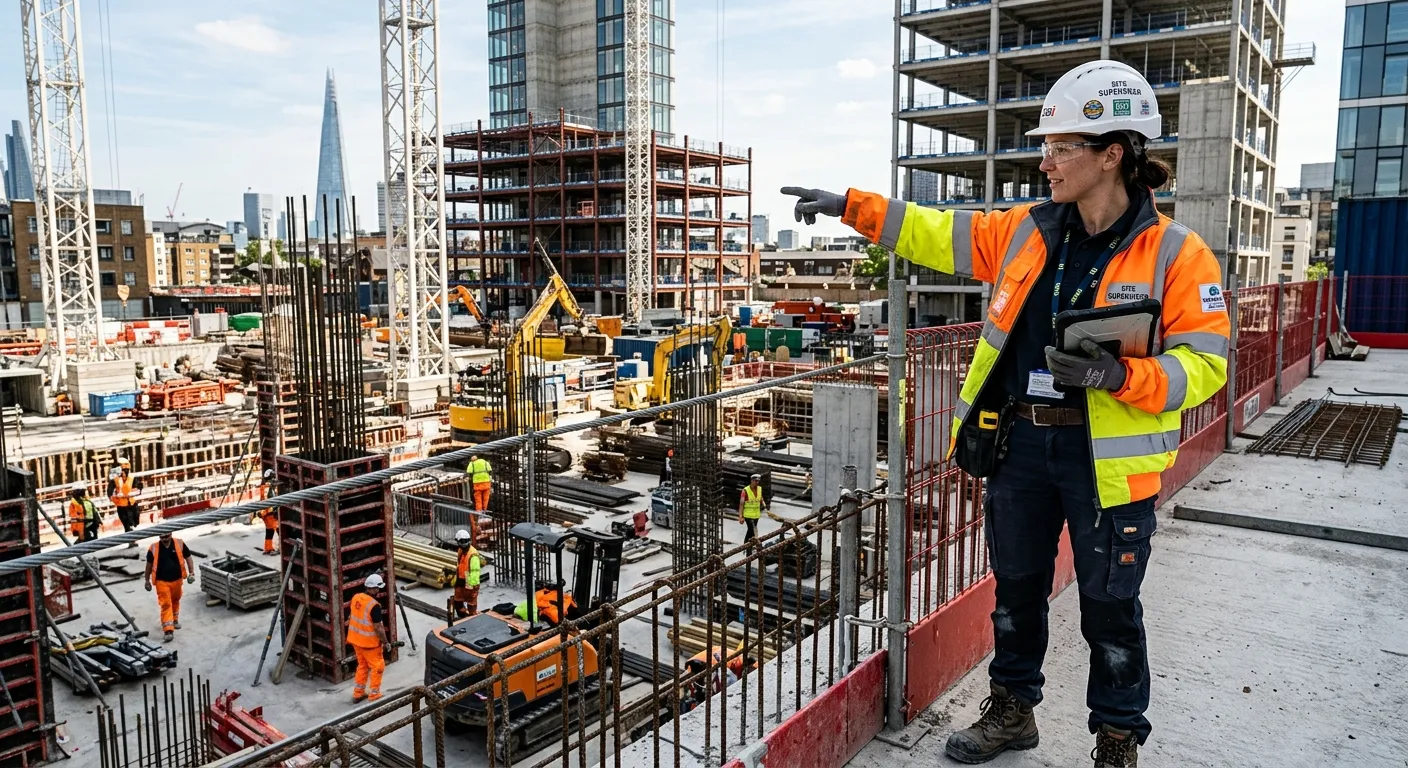
Mastering Site Supervisor Recruitment: Your Blueprint for Leadership Hiring Success
Securing a top-tier Site Supervisor is more than filling a role; it's about safeguarding productivity, compliance, and project vision. This definitive guide explores the strategies, pitfalls, and expert insights needed for effective Site Supervisor Recruitment, ensuring you hire leaders who can command respect and drive results.
A Multi-Faceted Approach to Supervisor Hiring
Building Your Recruitment Foundation
Effective Site Supervisor Recruitment begins long before the job advert is posted. It requires a clear alignment of the role's responsibilities with the specific demands of your project and company culture. A strategic plan defines not just the required technical skills (like SMSTS certification) but also the leadership style, conflict resolution capabilities, and commercial awareness needed. Consider whether you need a permanent leader for a long-term project or a highly-skilled temporary supervisor to manage a peak workload or cover a leave of absence. Partnering with a specialized agency for Construction Labour Hire Recruitment can provide the flexibility to scale your supervisory leadership up or down as project needs dictate, a strategy detailed in our resource on Construction Staffing & Labour Hire.
Pro-Tip: Define the"Non-Negotiables"
Before interviewing, list the 3-5 absolute must-haves for your Site Supervisor. This could be specific experience with high-rise projects, a proven track record in reducing incident rates, or fluency in using particular project management software. This focus prevents you from being swayed by impressive but irrelevant experience.
Where to Find Top Supervisor Talent
The pool for qualified Site Supervisors is competitive. Beyond generic job boards, successful sourcing involves tapping into industry networks, professional associations (like the CIOB), and specialist recruitment partners. A significant advantage lies in leveraging an agency's pre-vetted talent pool. For instance, when you need a supervisor who can also manage a team of Forklift Operators or specialized Traffic Marshall personnel, an agency with deep sector knowledge can identify candidates with that exact crossover expertise. This integrated approach to building your Industrial Workforce ensures all elements, from labourers to leadership, work seamlessly together.
Evaluating Beyond the CV
A CV lists qualifications; your assessment must uncover capability. Structured interviews should include scenario-based questions ("A sub-contractor is repeatedly breaching safety protocols. How do you handle it?"). Practical assessments, such as reviewing a sample method statement or conducting a simulated toolbox talk, are invaluable. Crucially, verify their commitment to safety culture. A competent supervisor must ensure their entire team, including any Asbestos Awareness Trained Labour or other specialists, operates within strict compliance frameworks. Checking references specifically for leadership under pressure and their ability to mentor junior staff will give you a clearer picture than any certificate alone.
Securing a Compliant & Effective Start
The final, critical phase of Site Supervisor Recruitment is ensuring a watertight, compliant onboarding. This includes verifying all certifications (CSCS, SMSTS, First Aid), right-to-work checks, and any sector-specific inductions. A professional staffing agency manages this burden entirely, including payroll, pension, and insurance, freeing you to focus on integrating the new supervisor into your project. This guarantee of compliance is a core part of Our Guarantee. Furthermore, a robust onboarding process sets the tone for their leadership, emphasizing your company's safety and operational standards from day one.
Why Expert-Led Supervisor Recruitment Delivers ROI
Investing in a meticulous recruitment process for your Site Supervisor yields tangible benefits that protect your project's budget, timeline, and reputation.
Enhanced Site Safety & Compliance Leadership
A correctly recruited supervisor is your first line of defence against accidents and regulatory breaches. They enforce protocols, champion a safety-first culture, and ensure all personnel, from general Construction Workers to Asbestos Awareness Trained Labour, adhere to the highest standards. This directly reduces liability, insurance costs, and project delays.
Optimised Productivity & Labour Efficiency
A skilled supervisor optimises workflows, coordinates trades effectively, and pre-empts bottlenecks. They manage labour resources intelligently, knowing when to request additional On Demand Labourers for peak periods and when to streamline the team. This direct management of your Labour Supply prevents costly idle time and keeps the project on schedule.
Reduced Turnover & Improved Morale
Poor leadership is a primary cause of staff turnover. A competent, fair, and communicative Site Supervisor fosters a positive site environment, retaining valuable skilled workers. This continuity saves you the repeated cost and disruption of backfilling roles, from apprentices to experienced tradespeople. Explore our Our Approach to understand how we match leadership style to site culture.
The Critical Role of Specialized Knowledge in Supervisor Selection
Modern construction and industrial projects are increasingly complex. A one-size-fits-all supervisor is a recipe for oversight. Your recruitment process must therefore drill down into specialized domain knowledge.
For example, a supervisor overseeing a refurbishment project in an older building must have direct experience managing teams where Asbestos Awareness Trained Labour is critical. They need to understand the specific control measures, signage, and workflow segregation required, not just as a box-ticking exercise, but as an integrated part of the site plan.
Similarly, a supervisor for a large-scale logistics warehouse project would benefit from experience coordinating with Forklift Operators and Site Cleaner teams to maintain efficient material flow and housekeeping. This level of granular matching is where specialist recruitment insight proves its worth, moving beyond generic qualifications to true operational competence.
Checklist: Essential Attributes for Your Next Site Supervisor
- Proven Safety Record: Demonstrable history of maintaining low incident rates and championing safety initiatives.
- Technical & Commercial Acumen: Ability to read drawings, understand budgets, and report on progress versus forecast.
- Leadership & Communication: Inspires respect, delegates effectively, and liaises confidently with clients, sub-contractors, and the direct workforce.
- Adaptability & Problem-Solving: Thinks on their feet to overcome unforeseen challenges, from weather delays to supply chain issues.
- Specialist Knowledge: Relevant experience for your project type (e.g., civils, residential high-rise, heritage, or managing Asbestos Awareness Trained Labour).
Site Supervisor Recruitment: Frequently Asked Questions
Get immediate answers to the most common queries about hiring and managing Site Supervisors.
The timeframe varies significantly based on the role's seniority, specialization, and market conditions. For a standard SMSTS-certified supervisor, allow 4-8 weeks from advert to offer for a permanent position. This includes sourcing, screening, multiple interview stages, and reference checks. For highly specialized roles (e.g., requiring experience with Asbestos Awareness Trained Labour teams or specific rail competencies), it can take longer. To dramatically accelerate this process, consider using a specialist agency with an existing talent pool. Our service for Hire Labour includes pre-vetted supervisors, potentially cutting the time-to-hire to under 2 weeks.
Absolutely. Temporary or contract Site Supervisor placements are an excellent solution for covering peak workloads, maternity/sick leave, or providing expert leadership for a specific project phase. This offers maximum flexibility without long-term commitment. Agencies like ours specialize in providing high-calibre temporary leadership, handling all payroll, tax, and employment liabilities. This model is part of our broader Services and is particularly useful for clients who need to quickly scale up a supervisory team for a new project win or to manage a crisis.
Verification is a multi-step, non-negotiable process. For qualifications, we check the original certificates (SMSTS, CSCS, NEBOSH, etc.) and often verify them directly with the issuing body where possible. Experience is validated through detailed reference checks with previous line managers or clients, focusing on specific projects, achievements, and leadership examples. We also scrutinize their understanding of critical safety protocols, such as managing Asbestos Awareness Trained Labour or implementing permit-to-work systems. This rigorous vetting is a cornerstone of our promise, detailed in Our Experience.
The costs are substantial and multi-layered. Direct costs include recruitment fees (again), severance pay, and lost productivity during the re-hiring process. Indirect costs are often far greater: poor decision-making can lead to rework, material waste, schedule overruns, and increased accident rates. Low team morale under poor leadership causes higher turnover among your valuable skilled workers, forcing you to constantly rehire for roles like Construction Workers and Forklift Operators. Investing in a robust, expert-led Site Supervisor Recruitment process is a proactive measure to avoid these hidden financial drains.
Ready to Hire a Site Supervisor Who Leads from the Front?
Stop wasting time on unqualified candidates and hidden recruitment costs. Partner with experts who understand the critical balance of leadership, safety, and productivity in construction and industrial management.
Need immediate cover? Explore our service for On Demand Labourers or browse our Blogs for more industry insights.
Case Study: Transforming a Problematic Project Through Strategic Supervisor Placement
The theoretical benefits of expert recruitment become concrete when examined through real-world application. The following scenario illustrates how a precise supervisor hire rescued a faltering project and delivered measurable ROI.
The Challenge: A High-Profile Commercial Refurbishment Off-Track
A mid-sized contractor was six weeks into a £2.5M central London office refurbishment. The project was already showing warning signs: a 10% schedule overrun, rising material waste, and two RIDDOR-reportable incidents within the first month. Morale was low, and the client was expressing concern. The existing site supervisor, while technically competent, lacked the assertive leadership and detailed planning skills needed to coordinate the complex interface of multiple trades, including critical specialists like Asbestos Awareness Trained Labour and heritage restoration experts.
The contractor faced a dilemma: persist with the current leadership and risk financial penalties and reputational damage, or make a high-stakes mid-project change. They engaged a specialist recruitment partner to find a replacement who could not only manage but recover the situation.
The Specialist Solution
The agency identified a candidate with a proven track record in fast-paced city centre refurbishments. Beyond SMSTS and CSCS Black, they held specific certifications in asbestos management and had experience implementing Last Planner System® techniques. Their references highlighted an exceptional ability to"impose order on chaos" and rebuild client confidence.
Implementation & Actions
Within the first week, the new supervisor conducted a full site audit, reinstated daily coordinated start-up meetings, and introduced visual planning boards. They immediately tightened the control measures around the asbestos removal zones, ensuring all Asbestos Awareness Trained Labour worked under strict supervision. Communication channels with all sub-contractors were formalised, eliminating ambiguity.
Measurable Outcomes
Within four weeks, productivity increased by an estimated 15%. The project recovered the initial delay and was back on schedule after eight weeks. There were zero further reportable incidents. Client satisfaction feedback shifted from"concerned" to"highly impressed." The cost of the specialist recruitment fee was dwarfed by the savings from avoiding delay penalties and reducing waste.
Key Takeaway:
A bad supervisory hire has acute, measurable costs. Conversely, a strategic hire—especially one made with the insight of sector specialists—can act as a project recovery tool, not just a staffing change. The right supervisor pays for themselves many times over.
Decoding the Technical Profile: Beyond SMSTS Certification
While SMSTS (Site Management Safety Training Scheme) is a baseline requirement, today's projects demand a broader digital and managerial skillset. Your recruitment criteria must evolve to assess these competencies.
The Digital & BIM-Savvy Supervisor
Modern construction is driven by data. A supervisor who only works from paper drawings is a liability. Probe for experience with:
- Common Platforms: Using tablet-based site management software (e.g., Procore, PlanGrid, A-Site) for daily reports, snagging, and progress photos.
- BIM Coordination: Ability to navigate a federated BIM model on-site, clash detection reports, and extract information for trades.
- Data-Driven Decision Making: Using data from telematics on plant, or productivity tracking tools, to re-allocate resources like On Demand Labourers in real-time.
A supervisor adept in these areas provides transparent reporting, reduces administrative burden on project managers, and minimises errors from information gaps.
The Commercial & Contractually Aware Leader
A supervisor who understands the financial and contractual implications of site decisions is invaluable. Assess their grasp of:
- Cost Awareness: Understanding labour and material budgets for their section of work, and recognising variance.
- Change Management: Knowing the process for instructing variations, capturing evidence (photos, records), and communicating with the QS.
- Programme Logic: Understanding task dependencies beyond their own trade to foresee and prevent knock-on delays.
This commercial lens turns a supervisor from a passive instruction-follower into an active project stakeholder who protects profitability.
Proactive Risk Mitigation in Your Hiring Process
Every hire carries inherent risk. For a pivotal role like Site Supervisor, a structured process to identify and neutralise these risks is non-negotiable. Below are advanced strategies beyond standard interviews.
1. The"Shadow Day" or Practical Scenario Test
Move beyond theoretical questions. For shortlisted candidates, arrange a half-day on a live (but low-risk) site or in a simulated environment. Present them with a curated set of challenges:
- A staged conflict between a groundworker and a Traffic Marshall over vehicle movement.
- A delivery of incorrect materials, requiring them to liaise with the site office and supplier.
- A review of a method statement for a high-risk activity, asking them to identify three potential weaknesses.
Observe their interpersonal skills, decision-making process, and ability to think under pressure in real-time. This reveals more than any answer to"What are your strengths?"
2. 360-Degree Reference Analysing
Don't just speak to the provided line manager. Aim to get a rounded view by requesting contacts for:
- A Peer: How do they collaborate with other supervisors or foremen?
- A Direct Report: How do they lead, train, and communicate with the tradespeople and Construction Workers under them?
- A Client/Client Representative: How did they manage the client interface and protect the company's reputation?
This triangulation of feedback uncovers patterns in behaviour that a single, often prepped, reference will not.
3. Cultural & Values Alignment Assessment
A supervisor who excels technically but clashes with your company's ethos can be deeply destructive. Integrate values-based assessment into the process:
-
Q
Question to Ask:
"Describe a time you had to choose between getting a task done quickly and ensuring it was done safely. What was the situation and outcome?"
-
Q
Question to Ask:
"How do you contribute to the professional development of the people you supervise? Give a specific example."
-
Q
Signal to Look For:
Do they refer to"my team" or"the workers"? Language can reveal a mindset of ownership and mentorship versus a transactional, top-down approach.
This deep dive into alignment ensures the supervisor will be a true ambassador for your company on site, reinforcing—not undermining—your culture.