Temporary Boiler Hire Prices: Your Complete Guide to Smart, Cost-Effective Heating Solutions
Navigate the complexities of temporary boiler hire pricing. Get expert insights on cost factors, hidden fees, and how partnering with a dedicated plumbing staffing agency can streamline your project and protect your budget.
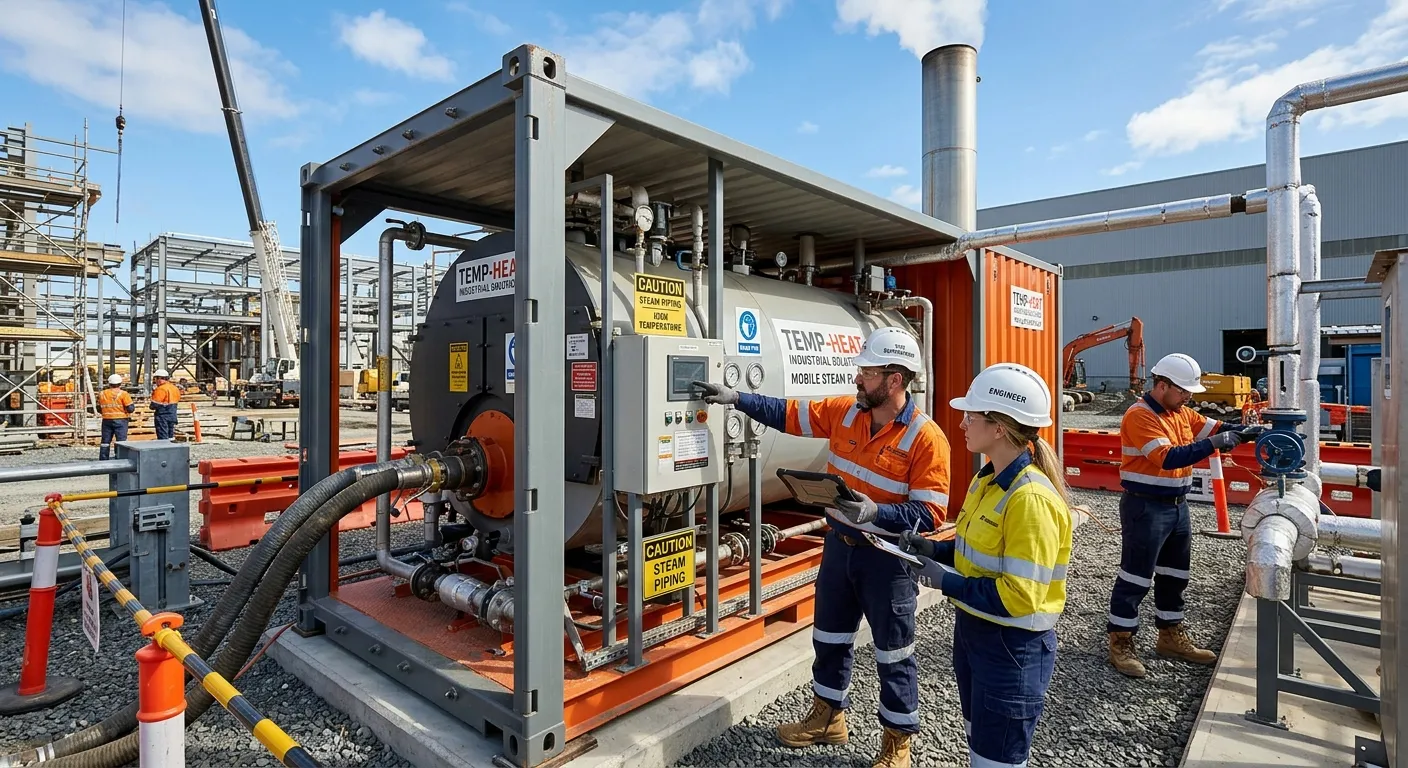
Understanding Temporary Boiler Hire Prices
When your primary heating system fails, or you need supplementary heat for a project, temporary boiler hire is a vital solution. However, temporary boiler hire prices are not a simple flat rate. They are a complex calculation influenced by boiler capacity, fuel type, duration, location, and crucially, the availability of skilled installation and maintenance personnel. This comprehensive guide breaks down every cost component, empowering you to budget accurately and avoid unexpected expenses. Whether you're managing a construction site shutdown, a hospital wing refurbishment, or a manufacturing process that requires constant heat, understanding these prices is the first step to a successful hire.
Pro-Tip: The Human Factor in Pricing
The most significant variable often overlooked is labour. A boiler is only as good as its installation and ongoing supervision. Partnering with a reliable plumbing staffing agency ensures you have CSCS-certified engineers and plumbers on hand. This not only guarantees safety and compliance but can prevent costly downtime due to improper handling, directly impacting your overall temporary boiler hire prices.
What Determines Your Quote? A Multi-Factor Analysis
Click through the tabs below to explore the primary cost drivers. Understanding these will help you ask the right questions and compare quotes effectively.
1. Boiler Capacity (kW Output) & Fuel Type
This is the most fundamental cost driver. Prices scale significantly with output.
- Small Units (500kW - 2MW): Ideal for small commercial buildings or as backup. Weekly hire can start from £800.
- Medium Units (2MW - 5MW): Common for larger construction sites, factories, or district heating during maintenance. Expect prices from £1,500 per week.
- Large Units (5MW+): Used for major industrial processes or large-scale temporary heating networks. Prices can exceed £3,000+ per week.
Fuel Type Matters: Gas-fired boilers are typically cheaper to hire and run than oil-fired equivalents, but availability of gas supply is key. Oil offers greater fuel storage flexibility on remote sites. Electric boilers have near-zero hire costs but exorbitant running costs, suitable only for very small, short-term needs.
2. Hire Duration & Contract Terms
Hire companies offer tiered pricing. The longer the hire, the lower the effective weekly rate.
Short-Term (1-4 Weeks)
Premium weekly rates apply. Ideal for emergency cover or very short projects. Flexibility is key, but it's the most expensive per-week option.
Medium-Term (1-3 Months)
Discounted rates become available. The sweet spot for most construction or refurbishment projects. Offers a balance of cost and commitment.
Long-Term (3+ Months)
Negotiated monthly rates offer the best value. Often includes more favourable terms for maintenance and support. Essential for large-scale infrastructure projects.
Watch for Minimum Hire Periods: Many companies have a minimum hire period of one week or one month. Also, clarify termination clauses—some contracts lock you in for the initial quoted period.
3. Logistics, Installation & Skilled Labour
This is where temporary boiler hire prices can become opaque. The boiler itself is one cost; making it work is another.
- Delivery & Collection: Costs depend on distance, site accessibility, and need for specialist transport (e.g., low-loaders). Can range from a few hundred to over a thousand pounds.
- Installation & Commissioning: Connecting the boiler to your system (flue, fuel, water, controls) requires skilled engineers. This is a separate labour cost, often billed per day or as a fixed project fee.
- Fuel Supply & Storage: You pay for the fuel consumed. For oil, you may need to hire temporary storage tanks. Fuel management adds another layer of cost and logistics.
- Ongoing Maintenance & Monitoring: Who ensures it runs safely and efficiently? This is a critical labour cost. An unattended boiler is a liability. Using a specialised staffing service to provide certified construction workers with mechanical expertise is a prudent investment.
A holistic quote from a reputable provider will include these elements. A quote that seems too low may have excluded essential labour and logistics, leading to nasty surprises.
Why Smart Hiring Beats Permanent Investment
Preserve Capital & Avoid Depreciation
Hiring converts a large capital expenditure (CapEx) into a manageable operational cost (OpEx). You avoid the upfront purchase price (often £50,000+ for industrial units) and the depreciation hit. Funds remain free for other critical investments, like hiring forklift operators or securing on-demand labourers.
Full Compliance & Risk Mitigation
Reputable hire companies provide boilers that are fully tested, insured, and compliant with UK pressure system regulations (PSSR). The liability for mechanical safety and insurance often rests with them, not you. This is as crucial as ensuring your site staff hold valid CSCS cards, a standard we uphold across all our construction recruitment placements.
Scalability & Project Flexibility
Need more heat as your project expands? You can upgrade to a larger unit. Finished a phase early? You can often downscale or terminate the hire. This agility is invaluable in today's fast-paced project environments, mirroring the flexibility offered by modern temporary job structures in the workforce.
Actionable Strategies to Optimise Your Temporary Boiler Hire Prices
Plan Ahead & Bundle Services
Last-minute hires incur premium rates. By planning your heating requirements during the project design phase, you can secure better temporary boiler hire prices. Furthermore, consider bundling services. Some providers offer discounts if you also hire ancillary equipment (pumps, hoses, tanks) or—critically—secure the labour for installation and monitoring through their partnered plumbing staffing agency network.
- Conduct a Thermal Load Assessment: Don't guess. An accurate assessment prevents you from over-specifying (and overpaying for) a boiler that's too large, or under-specifying and needing an expensive mid-project upgrade.
- Negotiate Labour as Part of the Package: When discussing temporary boiler hire prices, explicitly ask for a bundled quote that includes certified installation and weekly safety checks by a qualified engineer. This is more efficient than trying to source these skilled workers separately.
Case Study: The Cost of Unplanned Labour
A mid-sized refurbishment project hired a 3MW boiler but didn't secure dedicated operating staff. An in-house plumber with limited boiler experience spent 2 hours daily on checks, pulling him from other critical tasks. A minor fault was missed, leading to a 36-hour shutdown.
Investing in a dedicated, skilled temp from a labour hire platform for monitoring would have cost a fraction of this.
The Strategic Advantage of Flexible Resourcing
Just as temporary boiler hire provides flexible heating capacity, flexible staffing provides adaptable workforce power. Watch our expert breakdown of why this model is dominating modern project management.
Applying this flexible principle to your mechanical and industrial workforce planning is as smart as applying it to your equipment needs.
Frequently Asked Questions on Temporary Boiler Hire Prices
Clear answers to the most common queries about costs, contracts, and labour.
The base temporary boiler hire price usually covers the physical unit's availability. It frequently excludes:
- Delivery, installation, and decommissioning labour.
- Fuel costs and any required temporary fuel storage tanks.
- Consumables (water treatment chemicals, filters).
- Connection kits (flue, pipework, cabling) if non-standard.
- Ongoing daily/weekly monitoring and maintenance by a skilled engineer.
Technically, yes. However, it is often administratively complex and can lead to liability gaps. If the boiler fails, the hire company may blame incorrect operation by your third-party staff, and vice-versa. The most efficient and risk-averse approach is to use a provider that offers a combined service or to use a trusted plumbing staffing agency that has experience working with temporary boiler providers. This ensures a single point of contact for both the asset and the human expertise, much like how a main contractor manages construction staffing.
Prices are generally higher in London and the South East due to higher transport and labour costs. Remote or difficult-to-access sites (e.g., highlands, islands) will also see a premium for delivery. In major industrial hubs like the Midlands or the North, competition can lead to more competitive temporary boiler hire prices. Always get multiple localised quotes. Similarly, the cost and availability of skilled labour will vary by region; a national labour supply network can help mitigate this variance.
- Vagueness: A single lump sum without a breakdown.
- No Mention of Labour: Failure to specify who installs, commissions, and maintains the unit.
- Unrealistically Low Price: If it's significantly cheaper than competitors, critical elements are likely missing.
- No Insurance Details: The provider must have full public liability and equipment insurance.
- Pressure to Sign Long-Term Without Flexibility: Locking you into a 6-month hire for a 2-month project.
Ready to Secure Your Heating & Your Workforce?
Understanding temporary boiler hire prices is the first step. The next is executing a seamless plan that integrates reliable equipment with certified, skilled personnel. Don't let a lack of qualified staff become the weakest link in your temporary heating solution.
Just as you wouldn't leave a boiler unattended, don't leave your staffing to chance. Partner with a specialist.
Comparative Cost Analysis: A Real-World Scenario
To move beyond theory, let's examine a detailed cost breakdown for a common project: providing temporary heat for a 3-month office block refurbishment requiring a consistent 2.5MW output. The table below compares two approaches: a basic equipment-only hire versus a fully managed service inclusive of skilled labour.
| Cost Component | Basic Equipment Hire | Fully Managed Service (with Labour) | Notes & Risk Assessment |
|---|---|---|---|
| Boiler Unit (2.5MW, Gas) | £1,800 / week | £2,100 / week | Managed service includes a newer, higher-efficiency model with telemetry. |
| Delivery & Siting | £650 (one-off) | Included | Basic hire often charges extra for crane off-loading if ground conditions are poor. |
| Installation & Commissioning | £1,200 - £2,500 (quoted separately) | Included | A major variable. Requires sourcing a certified gas engineer, adding project management overhead. |
| Weekly Fuel Cost (Est.) | £1,100 | £980 | Managed services often include efficiency optimisation, reducing fuel consumption by 10-15%. |
| Daily System Checks & Minor Maintenance | Internal staff cost (est. £400/week) or ad-hoc calls | Included (1 hr/day from certified engineer) | The largest hidden cost. Using internal staff diverts them from core tasks and carries competency risk. |
| 24/7 Breakdown Cover | £250/month extra | Included | Without this, an overnight failure in winter could lead to frozen pipes and massive secondary damage. |
| Total Projected 12-Week Cost | £34,210 - £36,710 | £36,960 | The managed service offers price certainty, risk transfer, and frees your team to focus on the refurbishment. |
This analysis reveals a critical insight: the fully managed service is often marginally more expensive or even cost-comparable when all hidden variables are accounted for. The value is not in saving pennies on the hire rate, but in the elimination of operational risk, management burden, and the guarantee of compliance. This parallels the value proposition of using a dedicated labour hire agency for skilled trades—you pay for expertise and reliability, not just a warm body.
Beyond Construction: Specialised Applications & Their Unique Cost Drivers
While construction and refurbishment are common use cases, temporary boilers serve critical roles in other industries, each with unique specifications that significantly influence temporary boiler hire prices.
1. Events & Film Production
Providing heat for large marquees, location filming, or outdoor festivals demands ultra-quiet boilers (often housed in acoustic canopies) and rapid deployment/removal. The key cost drivers here are:
- Speed & Out-of-Hours Work: Premium rates for immediate delivery and installation over a weekend.
- Aesthetic & Noise Mitigation: Additional hire for acoustic enclosures and camouflaging, which can add 20% to the base rate.
- High-Temperature Hot Water (HTHW): For some film set processes, requiring specialised units at a higher cost.
Labour needs are intense but short-term, perfect for sourcing via a platform specialising in on-demand labourers with event experience.
2. Healthcare & Pharmaceutical
Hospitals and cleanrooms cannot tolerate a loss of steam for sterilisation or hot water for sanitation. Here, cost is secondary to absolute reliability and redundancy.
- N+1 Redundancy: Hiring multiple units so one can fail without impact, effectively doubling the hire cost.
- Enhanced Compliance Documentation: Boilers must come with full traceable service histories and may require specific chemical treatment regimes for steam purity.
- Dedicated, Vetted Operators: Engineers may need enhanced DBS checks and specific site induction, increasing labour costs by 15-25%.
The staffing requirement is for highly trusted, technically excellent personnel, akin to the calibre of worker provided through specialised construction recruitment for sensitive sites.
The Environmental Factor: How Emissions Regulations Are Shaping Prices
Modern temporary boiler hire prices increasingly reflect environmental compliance. In many UK cities, particularly within Clean Air Zones, only boilers with low NOx emissions can be operated.
- Low-NOx Premium: Hiring a compliant boiler can be 10-15% more expensive than a standard unit. However, non-compliance risks substantial fines and project shutdown.
- Fuel Efficiency Ratings: Newer, condensing boilers command a higher hire rate but deliver significantly lower fuel costs, offering a better total cost of ownership over medium-term hires.
- Carbon Reporting: For companies with ESG commitments, providers can supply detailed fuel consumption and carbon output data, a service that may add a small administrative fee but provides valuable reporting.
Forward-thinking providers are now bundling carbon offsetting into their packages, adding another layer to the value-versus-cost calculation.
The Digital Shift: How Technology is Optimising Hire Costs
The industry is undergoing a quiet digital revolution. Telemetry and IoT (Internet of Things) sensors are becoming standard on modern hire boilers, transforming them from dumb assets into smart, connected systems. This technology directly impacts operational efficiency and, ultimately, cost.
Remote Monitoring & Predictive Maintenance
A telemetry-equipped boiler transmits real-time data on performance, efficiency, fuel levels, and system health to a central dashboard accessible by both the hire company and the client.
- Reduced Labour Costs: Physical daily checks can be reduced to weekly visual inspections, as the system alerts for any anomalies. This can cut the required on-site labour hours by up to 70%.
- Fuel Optimisation: Live efficiency tracking allows for adjustments to be made remotely, ensuring the boiler runs at peak performance, directly lowering the single largest variable cost.
- Predictive Alerts: The system can predict component failure (e.g., a pump showing signs of wear) before it causes a shutdown, allowing for planned, lower-cost maintenance during working hours.
While telemetry-ready boilers may have a slightly higher base hire rate, the total cost savings on labour, fuel, and avoided downtime typically deliver a strong ROI for hires beyond one month.
Integrating Man and Machine
This technological shift doesn't eliminate the need for skilled labour; it redefines it. The role changes from manual checker to a more strategic technician-analyst who can interpret data and perform targeted interventions.
This creates a demand for a hybrid skillset—a plumber or heating engineer who is also comfortable with digital interfaces. Sourcing this new breed of worker is a key challenge, one that underscores the importance of using a progressive staffing partner with a deep talent pool that evolves with industry technology.