Your Essential Guide to Hiring Asbestos Awareness Trained Labour for Safe, Compliant Sites
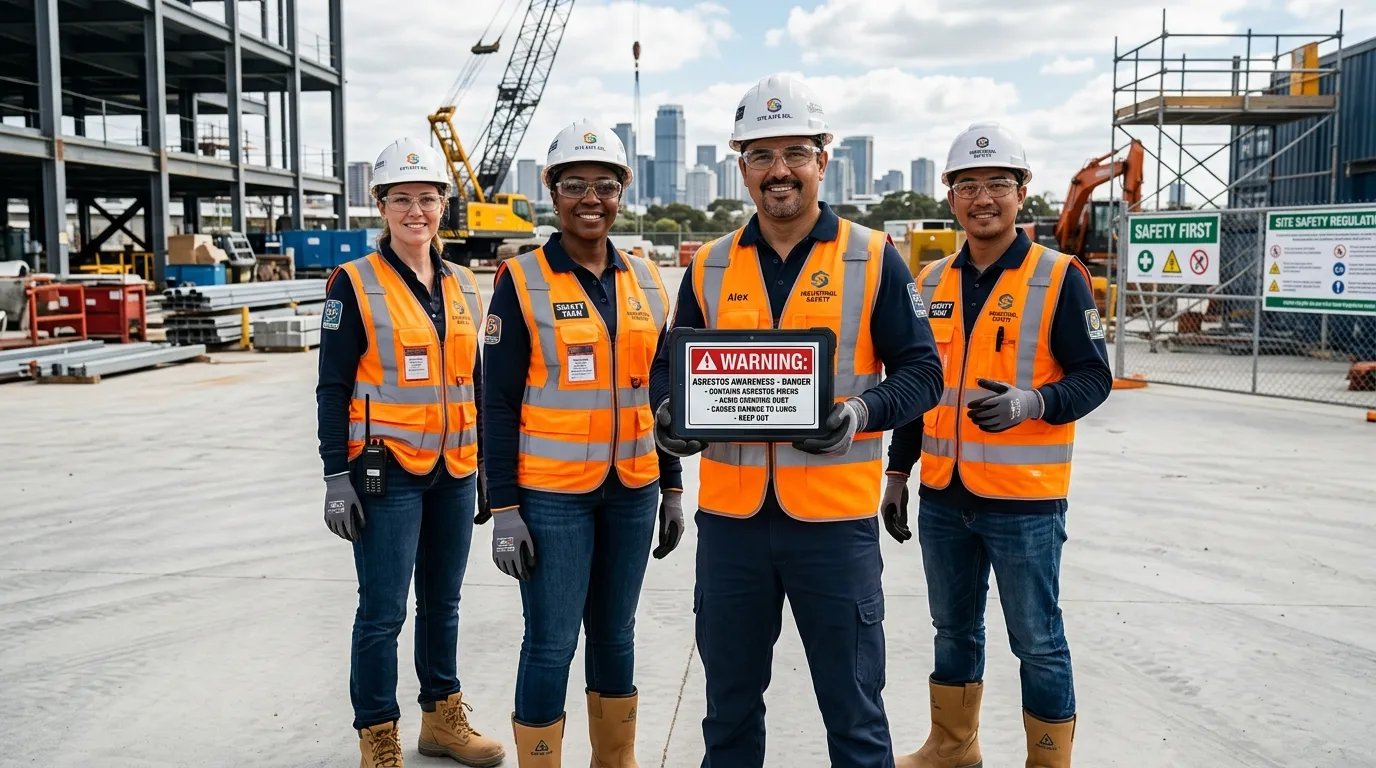
Secure your project's safety and compliance. Discover how to source, vet, and deploy certified Asbestos Awareness Trained Labour effectively, reducing risk and avoiding costly site shutdowns with our expert staffing solutions.
Mastering Asbestos Labour: A Multi-Category Overview
Navigating the complexities of asbestos requires understanding different facets of workforce management. Use the tabs below to explore key areas.
Why Asbestos Awareness Training is Non-Negotiable
Asbestos remains the UK's single greatest cause of work-related deaths, with over 5,000 fatalities annually linked to past exposure. For any project involving buildings constructed before the year 2000, the presence of asbestos-containing materials (ACMs) is a statistically significant risk. Asbestos Awareness Trained Labour is not a luxury but a fundamental legal and ethical requirement. This training, often referred to as Category A, equips workers with the knowledge to identify potential ACMs, understand the severe health risks (mesothelioma, lung cancer, asbestosis), and know the immediate procedures to stop work and report.
The financial implications of non-compliance are staggering. Beyond the human cost, a single inadvertent disturbance of asbestos can lead to a full site evacuation, decontamination costs running into hundreds of thousands, significant HSE fines (unlimited since 2016), and severe reputational damage. Integrating this trained labour into your broader industrial workforce strategy is a proactive measure that safeguards your project timeline, budget, and corporate integrity.
⚠️ Pro-Tip:
Never assume a building is asbestos-free without a survey. Always presume asbestos is present until proven otherwise by a Refurbishment and Demolition Survey. Your Asbestos Awareness Trained Labour are your first line of defence in this presumption.
Key Benefits of Professionally Sourced Asbestos Awareness Labour
Investing in correctly trained staff delivers measurable advantages across your entire operation.
Risk Mitigation & Legal Shield
Deploying certified labour is your primary defence against inadvertent asbestos exposure. It demonstrates to the HSE that you have fulfilled your 'Duty to Manage' under CAR 2012 by providing adequate information, instruction, and training. This creates a robust legal defence, potentially mitigating the severity of fines and prosecutions should an incident occur, protecting both the company and its directors.
Project Continuity & Cost Control
An asbestos-related stop-work order can derail a project for weeks. Trained labour identifies potential hazards early, allowing for planned, controlled management by licensed contractors. This avoids catastrophic unplanned stoppages, keeping your project on schedule and within budget. It's a core component of efficient construction staffing & labour hire strategy, where predictability is profit.
Enhanced Site Safety Culture
Asbestos-aware workers act as safety ambassadors. Their presence reinforces a culture of vigilance that extends to other hazards like working at height or electrical safety. This elevated safety mindset reduces overall incident rates, improves morale, and makes your site more attractive to top-tier talent, including skilled forklift operators and other specialists who prefer working for responsible employers.
Reputation & Client Confidence
In an industry where reputation is paramount, demonstrating a proactive approach to asbestos safety is a powerful differentiator. It builds trust with clients, main contractors, and stakeholders. It shows you manage risk professionally, making you a preferred partner for sensitive projects in schools, hospitals, and historic buildings, thereby unlocking new business opportunities.
Flexible, Scalable Resourcing
Asbestos risks aren't constant; they peak during specific phases like strip-out or refurbishment. Accessing Asbestos Awareness Trained Labour through a flexible staffing model allows you to scale this critical skill up or down as needed. This mirrors the agility seen in sectors like healthcare staffing, where specialised skills are deployed precisely when and where they are required, optimising labour costs.
Insurance & Liability Advantages
Insurers look favourably upon demonstrable risk management practices. Employing a workforce with mandated safety training can lead to more favourable premiums for employers' liability and public liability insurance. It also strengthens your position in the event of a claim, as it proves due diligence was exercised in protecting workers and the public from a known, lethal hazard.
The Legal Framework & Compliance Imperative
Understanding the law is the first step to compliance. The Control of Asbestos Regulations 2012 (CAR 2012) is the cornerstone of UK legislation, consolidating previous rules into a single framework. Its principles are hierarchical: first, determine if asbestos is present; second, assess the risk; third, manage the risk.
The"Duty to Manage" and Your Workforce
Regulation 4 places a 'Duty to Manage' asbestos on the owner or occupier of non-domestic premises, and anyone with contractual responsibility for maintenance or repair. This duty holder must take reasonable steps to find asbestos, assess its condition, and create a plan to manage the risk. Crucially, part of this plan must include ensuring anyone liable to disturb asbestos during their work receives adequate information, instruction, and training.
This is where your Asbestos Awareness Trained Labour becomes a direct instrument of legal compliance. They are the recipients of that mandated training. For a Site Supervisor Recruitment drive, this means candidates must understand they are not just managing tasks, but are a key link in enforcing the site's asbestos management plan. Their role includes checking that subcontractors and agency workers (from general construction workers to specialist site cleaners) have also received the appropriate level of training before they begin work.
🚨 Critical Distinction:
Asbestos Awareness Training (Category A) does NOT permit a worker to disturb or remove asbestos. That work is strictly reserved for operatives with higher-level training (Category B - Non-licensed work; Category C - Licensed work) and, for most removal, must be performed by a HSE-licensed contractor. Awareness-trained labour must STOP work and report if they suspect they have encountered asbestos.
Compliance Checklist
- Asbestos Management Survey or R&D Survey on file.
- Asbestos Register accessible to all on-site workers.
- All relevant workers hold current UKATA or equivalent certificates.
- Site-specific risk assessments and method statements reference asbestos.
- Clear reporting procedure for suspected ACMs is communicated.
Building a 100% Compliant Site Culture
Compliance is more than paperwork; it's an operational culture. This video breaks down how essential certifications like asbestos awareness integrate with other critical site requirements to create a fully compliant and safe working environment.
On-Site Deployment & Management Protocols
Securing trained labour is only half the battle. Effective deployment and management ensure their training translates into real-world safety. Here’s a step-by-step guide for site managers and supervisors.
1. Pre-Start Inductions & Briefings
Every worker, whether a permanent employee or temporary hire, must undergo a site-specific induction. This is non-negotiable. For Asbestos Awareness Trained Labour, this induction must explicitly cover:
- Location of the Asbestos Register: Show them where it is kept (often in the site office) and how to access it. A digital copy on a tablet is ideal.
- Site-Specific ACM Locations: Use plans and photos to highlight known or presumed asbestos locations relevant to their work area.
- The"STOP" Procedure: Reinforce the exact steps: Stop work immediately, prevent others from entering the area, report to the site supervisor or manager, and await instructions.
- Emergency Contacts: Provide clear, written contact details for the site's designated asbestos responsible person and the licensed removal contractor on retainer.
Toolbox Talk Template: Asbestos Awareness Refresher
Topic: Reinforcing the"STOP" Procedure.
Key Points: Review common ACMs on this site (e.g., Artex, old floor tiles, boiler insulation). Discuss real-life"near miss" scenarios. Q&A session.
Frequency: Weekly during high-risk phases, monthly otherwise. Document attendance.
2. Supervision & Continuous Vigilance
The role of the supervisor is critical. Effective Site Supervisor Recruitment must target individuals who are not just organisers but safety leaders. They must actively monitor work, especially in refurbishment zones, and encourage a culture where stopping work for a potential hazard is praised, not criticised. They should conduct regular walk-arounds with a focus on housekeeping; poor housekeeping can obscure ACM labels or spread contaminated dust. Supervisors must also ensure that any traffic marshals or other non-intrusive workers are still aware of asbestos zones to prevent accidental vehicle damage to ACMs.
Case Study: The Value of a Trained Labourer
During a office refurbishment in Manchester, a labourer tasked with removing old skirting boards noticed a fibrous, board-like material behind it that wasn't on the asbestos register. Remembering his training, he immediately stopped, cordoned off the area with warning tape, and reported it to his supervisor. A subsequent survey confirmed it was asbestos insulating board (AIB). Because the discovery was managed correctly, a licensed contractor was brought in under controlled conditions. The project was delayed by only 3 days, and exposure was prevented. The alternative—smashing through the AIB—could have contaminated the entire floor, led to a multi-week shutdown, and potentially caused fatal future exposures. That single trained labourer saved the project over £50,000 in unplanned costs and, more importantly, protected lives.
Frequently Asked Questions: Asbestos Awareness Labour
Expert answers to the most common questions about hiring and managing this critical workforce.
The HSE and UKATA strongly recommend that Asbestos Awareness Training (Category A) is refreshed annually. This is considered best practice to ensure knowledge remains current and procedures are front of mind. While the regulations do not specify a strict expiry date, an annual certificate is the industry standard and is what any competent contractor, client, or HSE inspector will expect to see. Using labour with out-of-date training significantly weakens your legal defence and increases risk. Our agency ensures all workers in our pool have current, valid certification.
Absolutely not. A site briefing is not a substitute for certified asbestos awareness training. CAR 2012 requires"adequate" training, which is defined as a structured course covering the properties of asbestos, health effects, typical ACM locations, and emergency procedures. A quick briefing does not meet this legal standard. Using untrained labour for tasks where they might disturb the fabric of a building is a direct breach of regulations and exposes you to severe liability. Always source properly certified construction labour hire for such environments.
UKATA (UK Asbestos Training Association) is the leading voluntary governing body for asbestos training. It sets the syllabus, audits training providers, and ensures quality standards. Other reputable providers exist (e.g., IATP, independent trainers), and their certificates are legally acceptable if the training delivered meets the HSE's guidance. However, UKATA is the most widely recognised and trusted standard. When hiring, a UKATA certificate provides the strongest assurance of quality. It's a simple, reliable benchmark in Site Supervisor Recruitment and general labour vetting.
Speed is critical in construction. Leveraging our national network and pre-vetted talent pool, we can typically deploy certified Asbestos Awareness Trained Labour within 24-48 hours, often sooner for urgent requirements. This mirrors the rapid response we offer for same-day temp workers in other sectors. The key is our proactive verification process; we don't start checking certificates when you call—we maintain a live register of compliant, available workers, much like our approach for urgent hiring in Coventry and other regions.
Outdoor work: Possibly, yes. If the work involves groundworks on brownfield sites (old industrial land), or disturbing the exterior fabric of an old building (e.g., roofing, cladding, drilling into render), asbestos may be present. A risk assessment is required. New builds: On a pure greenfield site with all-new materials, the risk is negligible. However, most"new build" construction involves some work on or near existing structures, site cabins, or imported materials. The safe and legally defensible approach is to ensure all workers on any construction site have basic awareness training unless you can definitively rule out ALL risk of encountering ACMs—which is rarely possible.
Stop Gambling with Site Safety
Don't let a lack of certified Asbestos Awareness Trained Labour be the weakest link in your project. Partner with an agency that understands the legal, practical, and human imperatives of asbestos safety.
Pre-Vetted Talent
Every worker's certification is verified before they step foot on your site.
Rapid Deployment
Get the compliant labour you need, when you need it—often within 24 hours.
Full Compliance Support
We handle the paperwork and verification, giving you peace of mind.
Secure Your Site. Protect Your People. Preserve Your Project.
POST YOUR JOB & HIRE SAFETY-CERTIFIED LABOUR NOWOr call our safety staffing specialists directly via our contact page.