Team Labourer Agency — Demolition Crew Temporary Hire Insurance Requirements: What Coverage You Need When Booking Specialist Workers
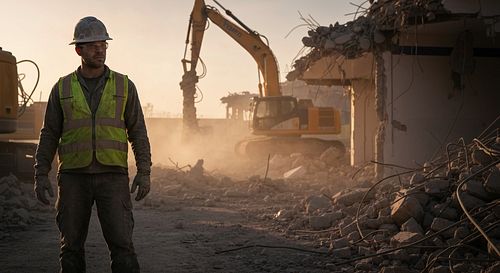
Hiring a temporary demolition crew isn't like bringing in a temp to file paperwork. When you're dealing with wrecking balls, excavators, and structural instability, the stakes are sky-high.
If you’re a project manager or contractor looking to scale up your workforce with a Team Labourer Agency, you already know that demolition is a high-risk game. But here’s the thing that often gets overlooked in the rush to meet deadlines: Insurance.
Bringing on temporary specialist workers changes your liability landscape completely. Who pays if a temp worker gets injured? What happens if a hired hand accidentally drops a sledgehammer through a neighbouring property's roof?
This guide breaks down exactly what insurance coverage you need when booking specialist demolition workers, why standard policies might fail you, and how to protect your bottom line.
The Reality of Risk in Demolition
Before we dive into the specific policies, let’s be real about the environment we’re operating in. Demolition sites are dynamic. Walls collapse, dust flies, and heavy machinery moves in tight spaces.
When you hire from an agency like a Team Labourer Agency, you are introducing variables you don't fully control. These workers are skilled, yes, but they aren't your permanent employees. This creates a "liability gap" between your existing company insurance and the agency's coverage.
If that gap isn’t closed, a single accident could bankrupt a small-to-medium project.
Why "Standard" Construction Insurance Isn't Enough
Many contractors assume their General Liability (GL) policy covers everything. It usually doesn't.
Most standard GL policies have specific exclusions for demolition work, especially if it involves:
- Structural alteration.
- Work above a certain height (often 3-4 stories).
- Use of explosives or ball-and-chain methods.
If you are hiring temps to do work that is excluded from your primary policy, you are effectively uninsured for those activities.
1. Public Liability Insurance: The Non-Negotiable
This is the bedrock of your protection. Public Liability Insurance covers you if your business activities kill or injure a member of the public, or damage their property.
The "Temp Worker" Twist
When you hire temporary demolition crews, the lines get potential blurry. If a temp worker causes damage to a third party (e.g., debris hits a pedestrian or a car parked nearby), who is liable?
- Your Responsibility: If the temp is working under your direct supervision and instruction (which is typical for labour-hire), your insurer will likely view them as your responsibility.
- The Coverage Gap: Ensure your Public Liability policy explicitly covers "labour-only sub-contractors" or "hired-in plant and labour." Some policies cap the percentage of turnover you can pay to subcontractors before coverage is reduced.
Key Takeaway: Check your policy limit. For demolition, a limit of £5 million or £10 million is standard (and often mandatory for council contracts). Never settle for less when heavy debris is involved.
2. Employers’ Liability Insurance: It’s Not Just for Employees
In the UK (and many other jurisdictions), Employers' Liability (EL) insurance is a legal requirement. It covers claims from employees who’ve been injured or become seriously ill as a result of working for you.
Does it cover Agency Workers?
This is the most common pitfall. You might think, "They work for the agency, so the agency's insurance covers them."
Wrong.
In the eyes of the law and insurance, if you control the worker—meaning you tell them what to do, how to do it, and provide the tools—they are effectively your employee for that duration.
- The Bona Fide Subcontractor vs. Labour-Only Subcontractor:
- Bona Fide: They come in, do a specific job without your supervision, bring their own materials, and have their own insurance. (Rare for general labour hire).
- Labour-Only: They work under your direction using your tools. (This is standard for agency demolition crews).
For Labour-Only subcontractors, you need Employers' Liability insurance. If a temp worker falls through a floorboard, your EL policy is what responds.
3. Contractors’ All Risks (CAR) Insurance
While Public and Employers’ Liability cover people, Contractors’ All Risks (CAR) covers the project.
Demolition is destructive by nature, but you are often demolishing one part of a site to build another, or gutting an interior while preserving the shell. CAR insurance covers physical damage to the works themselves.
Why You Need This for Temp Hires
Temporary workers are less familiar with your site than your permanent crew. Accidents happen.
- Scenario: A temp worker accidentally cuts a main water pipe, flooding the basement you just finished prepping.
- Coverage: CAR insurance protects against this financial loss, covering the cost of re-doing the work or repairing the damage caused by the negligence of the hired crew.
4. Hired-In Plant Insurance
Demolition requires heavy toys: excavators, breakers, skid steers. If you are hiring the machinery and the workers to operate it, or if the agency workers are using machinery you have hired from a third party, you need Hired-In Plant Insurance.
The "Continuing Hire Charges" Trap
If a temp worker flips an excavator, you aren't just liable for the repair of the machine. You are liable for the rental costs while it is being fixed.
- Example: An excavator costs £500/week. A temp damages it, and it takes 6 weeks to repair. You owe the hire company £3,000 in rental fees for a broken machine.
- Solution: ensure your Hired-In Plant policy covers "Continuing Hire Charges."
5. Professional Indemnity (If Applicable)
This is less common for general labourers but vital if you are hiring specialist supervisors or consultants through an agency.
If you hire a temporary Site Manager or Demolition Engineer to plan the drop of a structure, and their advice or calculation is wrong—leading to financial loss—Professional Indemnity (PI) kicks in.
If the agency provides a supervisor who directs the crew, ask the agency for proof of their PI insurance. If you are directing the crew based on your own plans, ensure your own PI is up to date.
The "Team Labourer Agency" Vetting Checklist
When you call an agency to book a crew, don't just ask for their hourly rate. Ask for their insurance packet. Here is what you need to verify before they step on site:
- Proof of Agency Insurance: Do they hold their own Public Liability and Employers' Liability? (Even if you need your own, it’s a sign of a reputable agency).
- Competency Cards: Insurance policies often have clauses requiring workers to be "suitably qualified." Ensure the agency sends workers with valid CSCS (Construction Skills Certification Scheme) or CCDO (Certificate of Competence of Demolition Operatives) cards. No card = potentially void insurance.
- Indemnity Agreements: Read the contract. Does the agency indemnify you against negligence caused by their workers? Or are they shifting 100% of the risk to you?
Common Exclusions to Watch For
When reviewing your policy before booking a demolition crew, search your document for these dangerous exclusions:
- Depth Limits: Does your policy exclude excavation deeper than 1 metre? (Common in standard policies).
- Height Limits: Are you covered for work above 10 metres?
- Hot Work: If the demolition involves cutting steel with torches, do you have a specific "Hot Work" condition? (Usually requires a permit system and fire watch).
- Asbestos: Most standard policies absolutely exclude asbestos. If your demolition crew might encounter it, you need a specialist environmental policy.
The Cost of Getting It Wrong
Let’s look at the math of a potential disaster.
Imagine a temporary labourer, hired for £150/day, drops a section of masonry onto a parked luxury car and injures the driver.
- Legal Fees: £25,000+
- Vehicle Replacement: £60,000
- Medical Damages: £100,000+
- HSE Investigation Fines: £20,000+
Total Risk: £205,000+
Without the correct Public Liability extension for "Labour-Only Subcontractors," this money comes directly out of your company's cash reserves. Is it worth saving a few hundred pounds on a premium? absolutely not.
Conclusion: Cover Your Assets
Hiring a demolition crew from a Team Labourer Agency is a smart way to keep projects moving and manage costs. But it introduces a layer of liability that requires attention.
Don't assume your standard builder's policy covers specialist demolition temps.
- Verify your Employers' Liability covers temporary/labour-only staff.
- Check your Public Liability limits (aim for £5m+).
- Ensure your Contractors' All Risks covers negligence by temporary workers.
- Confirm the temps have the right CCDO cards to validate your coverage.
Construction is unpredictable. Your insurance shouldn't be.
Frequently Asked Questions (FAQs)
1. Does the recruitment agency’s insurance cover the temporary workers they send me?
Generally, no. If the workers are under your supervision and direction (which is standard for demolition labourers), they are considered your "labour-only subcontractors." This means your insurance—specifically your Employers' Liability and Public Liability—must cover them. The agency's insurance usually only covers their own internal negligence, not the work performed on your site.
2. What is the difference between Public Liability and Employers' Liability regarding temp workers?
Think of it this way:
- Employers' Liability (EL) protects the worker. If the temp gets hurt on your site, EL covers their compensation claim against you.
- Public Liability (PL) protects everyone else. If the temp hurts a passerby or damages a neighbour's property, PL covers the damages.
You need both when hiring temporary crews.
3. I have a standard "Builders" insurance policy. Can I hire a demolition crew?
You must check your policy wording immediately. Many standard builders' policies have specific exclusions for demolition, especially involving structural changes or work above certain heights. If you undertake work that is excluded, your policy is void. You usually need to notify your broker to add a "Demolition Extension" or take out a specific policy for that project.
4. What happens if a temporary worker damages my hired machinery?
This depends on who hired the machine. If you hired the excavator, you are responsible for it. You need Hired-In Plant Insurance. Crucially, check if your policy covers "labour-only subcontractors" operating the machinery. If your policy restricts operation to "employees only," your claim for the damaged machine could be rejected.
5. Why do temporary demolition workers need CCDO cards for insurance?
Insurance policies almost always contain a "Condition of Competence." This states that you must ensure anyone working on site is qualified to do the job. In the UK demolition industry, the CCDO (Certificate of Competence of Demolition Operatives) card is the standard proof of competency. If a worker causes an accident and they were unqualified (no card), the insurer may refuse to pay the claim, arguing you failed to vet the worker.